






You have probably heard the word "discipleship" in church or in conversation with other believers. Maybe someone invited you into a discipleship relationship and you were not entirely sure what that meant. Or maybe you have been walking with Christ for years and still wonder whether discipleship is something you need at this point in your life.
The short answer: it is. Discipleship is not a program you complete or a class you graduate from. It is the ongoing, relational process of becoming more like Jesus - and it was never meant to happen alone. It is a slower thing than pastoral care, which meets a specific struggle, and slower again than the waiting that so much of it turns out to involve.
What discipleship actually means
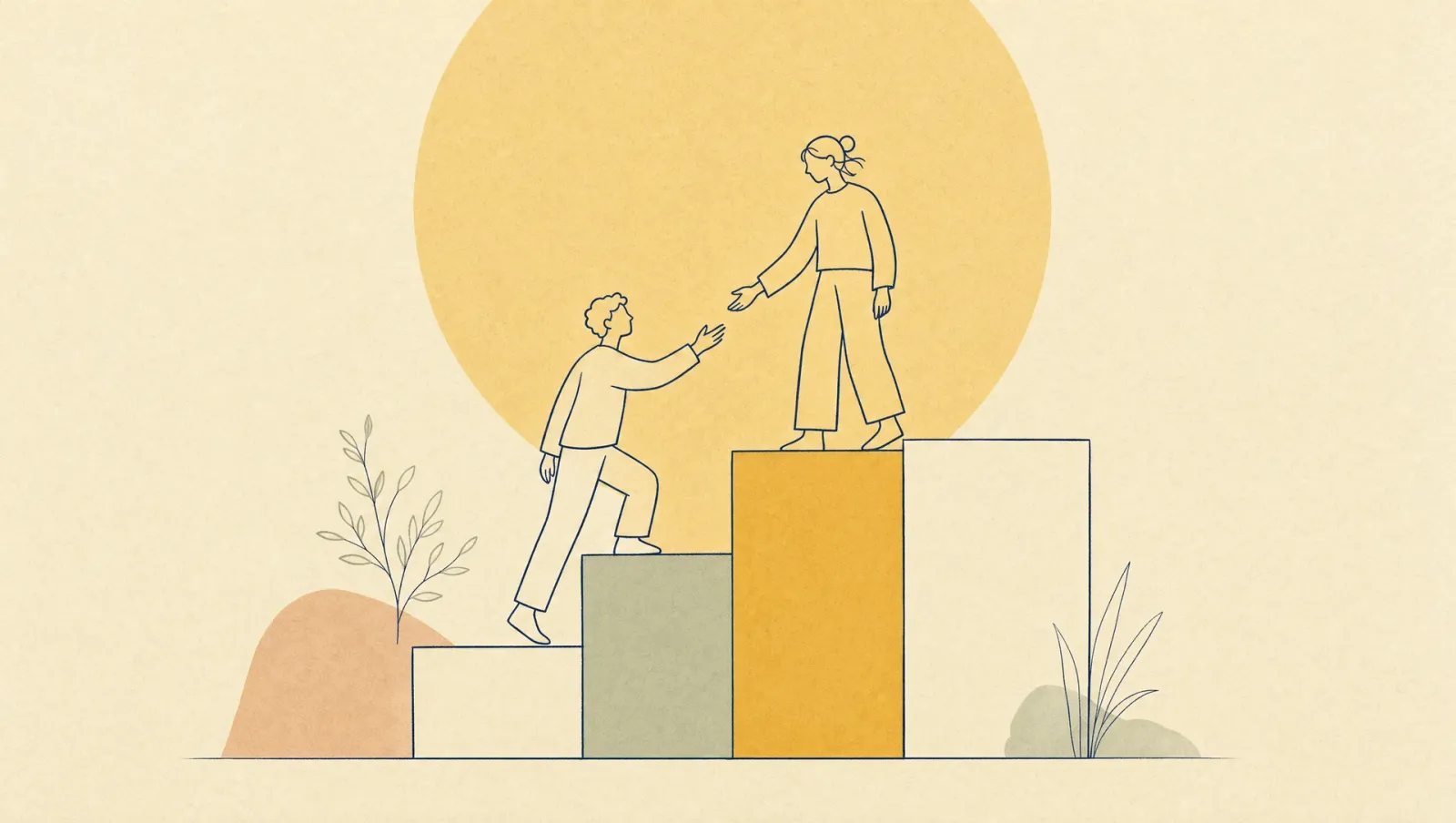
At its simplest, discipleship is one person helping another person follow Jesus more closely. The word "disciple" just means learner or student. In the Gospels, Jesus called twelve ordinary people to walk with him, watch how he lived, ask questions, and then go do the same. That pattern - learning by walking alongside someone further down the road - is the heart of discipleship.
"Therefore go and make disciples of all nations, baptizing them in the name of the Father and of the Son and of the Holy Spirit, and teaching them to obey everything I have commanded you." - Matthew 28:19-20
This was not a suggestion. It was the final instruction Jesus gave before ascending. Making disciples was the mission he left behind, and it remains the mission of the church today.
But here is what often gets lost: discipleship is not just teaching. It is not a lecture series or a reading plan, though those things can be part of it. Discipleship is a relationship. It is someone who knows you, prays for you, challenges you, and walks with you through the real stuff of life - doubt, grief, temptation, growth, calling, and everything in between.
What discipleship looks like in practice
If you are imagining something rigid or formal, set that aside. Discipleship can take many shapes, and the best discipleship relationships tend to be flexible and personal. Here is what it often looks like in practice:
Regular conversation. A discipleship relationship usually involves consistent, intentional time together - weekly or biweekly. This might be over coffee, on a walk, or through a video call. The rhythm matters more than the setting.
Scripture together. You open the Bible together. Not to check a box, but to let God's word speak into the specific season you are in. A good discipleship guide helps you connect scripture to the decisions, struggles, and questions you are actually facing.
Honest questions. Discipleship creates a safe space to ask the things you might not feel comfortable asking on a Sunday morning. Why does prayer feel empty right now, how do I forgive someone who has not apologized, and what does faithfulness look like in my career? These are discipleship questions.
Accountability with grace. A discipleship relationship involves honesty about where you are falling short - not to shame you, but to help you grow. The best guides hold the tension between truth and compassion, speaking into your life with both directness and deep care.
Prayer. Not just praying at the end of a meeting, but genuinely interceding for each other throughout the week. Prayer knits a discipleship relationship together in ways that conversation alone cannot.
"As iron sharpens iron, so one person sharpens another." - Proverbs 27:17
This is the picture. Two people, side by side, becoming sharper and stronger because of the relationship between them.

Why it matters now more than ever
We live in an era of unprecedented access to information. You can listen to a sermon from any pastor in the world, read thousands of devotionals online, and download a Bible app in seconds. And yet, many believers feel more spiritually isolated than ever.
Information is not the same as formation. You can know a lot about God and still feel distant from him. You can memorize verses and still struggle to live them out on a Tuesday afternoon when life gets hard.
Discipleship fills the gap that content cannot. It gives you a real person who sees you, knows your story, and helps you apply faith to the texture of your actual life. It is the difference between reading about swimming and having someone in the water with you, showing you how to move.
This is especially true during seasons of transition or difficulty - a career change, a loss, a crisis of faith, a new marriage, the early years of parenting. These are the moments when having a guide matters most, and they are also the moments when it is hardest to find one.
And here is something that needs to be said plainly: discipleship is not just for new believers. Whether you came to faith last month or thirty years ago, you never outgrow the need for someone walking alongside you. Spiritual maturity does not mean spiritual independence. Even Paul had Barnabas. Even the most seasoned believers benefit from someone who asks good questions and points them back to Christ.
"And let us consider how we may spur one another on toward love and good deeds, not giving up meeting together, as some are in the habit of doing, but encouraging one another." - Hebrews 10:24-25
The call to walk together is woven throughout scripture. It is not optional. It is how the faith was designed to be lived.
How to find a discipleship relationship
This is where many people get stuck. You know discipleship matters, but where do you start? Not everyone has a mature believer in their immediate circle who has the time, availability, and relational fit to serve as a guide. Churches do their best, but pastoral staff are stretched thin and small group dynamics do not always create the depth that discipleship requires.
Here are a few practical starting points:
Ask your pastor. Let your church leadership know you are looking for a discipleship relationship. They may be able to connect you with someone, or point you toward a program already in place.
Look within your community. Is there someone in your life - a small group leader, an older believer, a mentor - who you respect and trust? Sometimes the invitation is simpler than you think.
Consider a structured match. If finding the right person feels overwhelming, or if you want to be paired with someone who has been vetted and trained for this kind of relational ministry, a matching service can take the guesswork out of the process.
The most important thing is to start. Discipleship does not require perfection from either person. It just requires willingness - a willingness to show up, to be honest, and to let someone else into your walk with God. If what you are looking for is more focused than discipleship - a season of work on a specific struggle rather than the long arc of formation - that is biblical counseling territory, and the related question of biblical counseling vs therapy is worth a read before you decide which kind of guide you actually need.
If you are ready to take that step but unsure where to find the right guide, BetterFaith matches you with vetted pastors and biblical counselors who are trained for exactly this kind of relationship. You meet over video, on your schedule, with someone who fits your season and your questions. The first conversation is the hardest part. Get matched and we will set up the rest.